Tuesday, July 5, 2011

Slow and steady

On July 3rd, I was able to make it out to the farms and have a good look at the miscanthus plot. We were also lucky enough to have Emily Heaton from Iowa State University meet us to have a quick tour. We were able to discuss the plot, growing expectations, equipment & labor, and talk about general practices and shared lessons learned over years of growing miscanthus as well as other research and personal projects. I look forward to sharing our experiences into the future with what works, what doesn't, and how to logistically make a biomass crop really work.

As traditional Iowa farmers, my dad and I can easily look as our new grass plot and say that it looks terrible. The nearby corn is approaching shoulder height, and the grass is far behind other nearby established brome grass.  But this is a new plant, and we have to change our mindsets. Upon closer inspection, there are a lot pf plants coming, and they seem to be doing well.
First view entering the plot. Quite a bit of foxtail in this area, but this is right next to the driveway entrance to the field. Same vantage point as many other previous pictures.

This is at the top of the hill in the middle of the plot. A few really good rows are visible without a lot of weeds around. The tall skinny grass is the miscanthus, everything else are weeds.
 
There needs to be a broad-leaf pesticide application soon, but it really looks like the miscanthus might make it! Emily assured us that the stand of first year rhizome grass looked really good. Her pleasant surprise helped calm our original doubts.

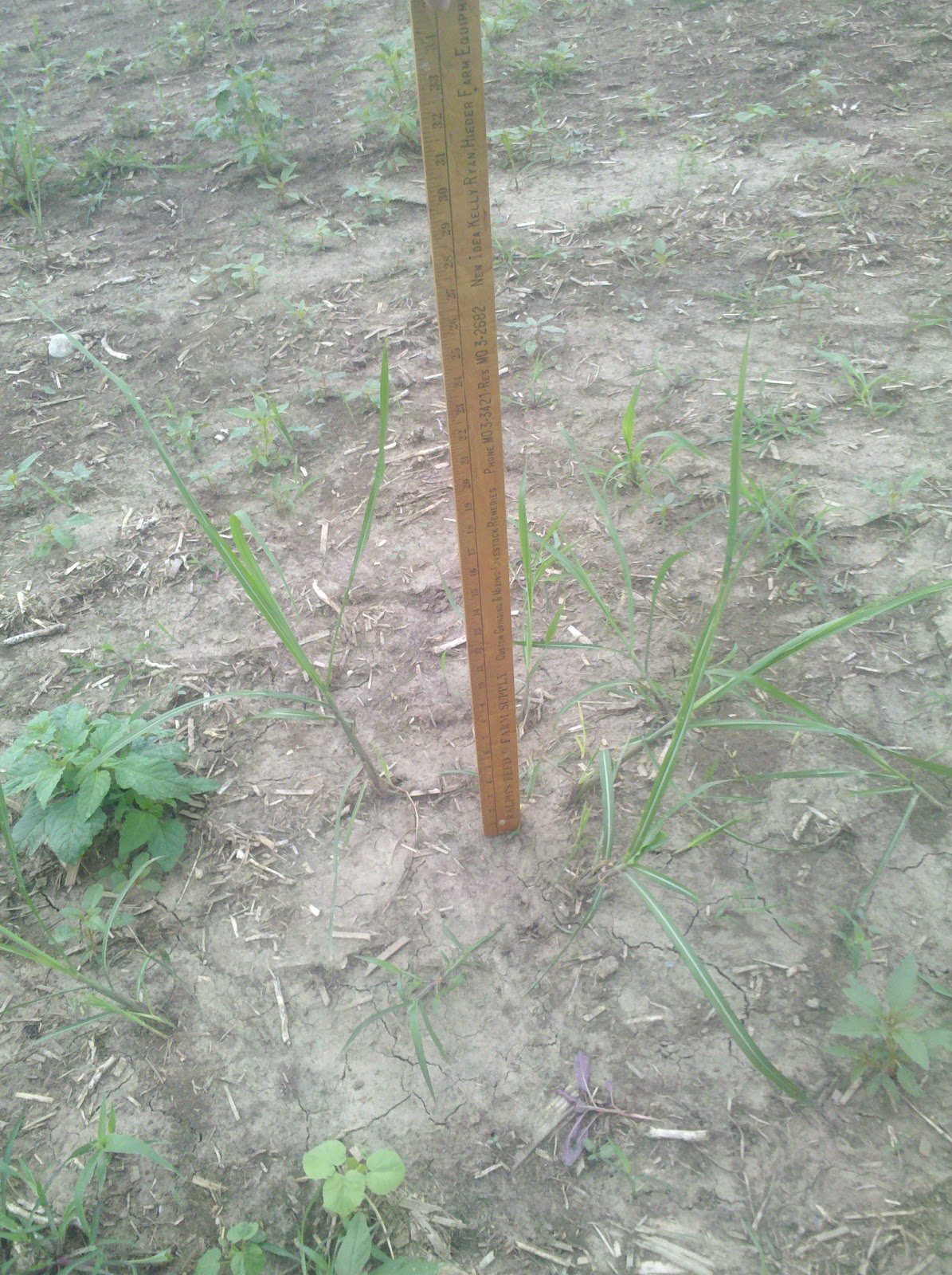
I got a yardstick and took a couple pictures of a few plants. I would guess that about 75% of plants are up, and of them 50% or better look like these plants below with the rest still very small as if they just came out of the ground. It will be better to see again after the broad-leaves are killed off.

25" single plant lots of good looking leaves.

Good sized plant, 4+ separate plants coming out of the same rhizome.

Smaller plant here 10" in height and only a few leaves, this is the general middle range of plants out there at this time

Another good medium sized plant. The terrace grass is in the background.

Saturday, July 2, 2011

Growing update

I missed posting a few weeks ago when I took some more pictures of the grass starting to poke through the soil. A week or so after planting temperatures started to climb, and with all the rain we have had, the volunteer foxtail grass started growing. we tried to keep it knocked down by harrowing the ground well until the miscanthus started to come through.
These pictures were all taken June 12, 2011, 25 days after the initial planting.
After all the rain, a pool of water sits in the low spot. This is the view from the field entrance

This is on the back side of the hill. You can see there was quite a bit of erosion that happened from the rain and no soil cover. The stubble that was  harrowed in was still in the top portion of the soil. There was not deep gullies created by the rain.


Here is a grass coming out. very new. This likely just came through in the last day or two.

A little hard to see but this and the two below attempt to row the grass by sight. They are there, but are so small you have to almost know what your looking for, The grass is about 3-6" tall and doming through at the spaced we planted. It look like there is a good percentage of survival rate of the rhizomes. They are just slow to get started.


Thursday, June 2, 2011

Coon Rapids Enterprise

Page 5 of the Coon Rapids Enterprise, Thursday, May 26, 2011 has our story
Energy Grass growth test begins near Manning

Also, same story on the front cover of the Manning Monitor today, Thursday June 2, 2011.

Poking out

We finally have sunshine and heat! And wow is the gras growing! We dug up a few rhizomes over the past weekend to be sure they were growing. Sure enough they were starting to sprout out new shoots. Very small though. Since then we have had temps in the 90's and lots of sunshine (and some evening rain). The rhizomes I planted in a pot outside my back door sprouted on May 31st and haven't stoped since. I even planted it in junk clay soil to test the worst conditions I could.  So I am feeling much better about the rhizomes taking off.

Friday, May 27, 2011

Rain and publicity

Nothing but rain since planting. A few nice warm days in between, and overall good weather. Almost 4 inches of rain since planting. It would be nice to warm up some.

A nice article was included on page 9 of the May 28, 2011 Iowa Farmer Today. I couldn't find the article online though.

Saturday, May 21, 2011

We're in the ground!

On Wednesday May 18th we were able to get the rhizomes in the ground. A good rain fell Friday morning and Friday night that should set the scene for great growth. We hope to see some leaves breaking the soil soon.

An article in the local paper about the receiving of the  grant was published in the Denison Bulletin.

During planting John Klein formally of the M&M divide RC&D visited and wrote a new article about our endeavors and distributed that around. I hope to see more on that soon.

Planting got started early around 8:30 am on a great spring day. Rob sat with me on the back to plant rhizomes while Denny drove. We found the rate of rhizomes went fairly well. Rob and I fed about as fast as we could and Denny adjusted the speed of the tractor to adjust the rate per acre. Rob and I could see down the tube really well to make sure our approximate spacings were correct. The high rate plot was placed on 40" rows and 6" apart. This was altered from out original plan so that we would not plant double rows. The benefit of double rows did not seem worth it when we got into the field. if we find issues with the growth of 6" spacing we will make note and adjust next time.The mid population density was aimed to be 9" apart, but we also ran up to 12" a time or two while getting the speed right. The low population runs were 18" apart. The low population is more in the lines of large plantation style plant populations and seemed very straight forward if we were to do a much larger area.
Fist run of the season

final design planter in operation
Of the rhizomes, we received roughly 1,000 to a box. We were able to measure our work to how fast we went through boxes of rhizomes.  For the high density plot, each of the 4 500' runs took roughly 20 minutes and 2 full boxes to complete. The low population density plot took only 10 minutes and one box to complete. The middle range plot ran around 1.25 to 1.5 boxes each run.

The planter worked out really well. It dug a 4 inch furrow where the rhizomes were dropped into. then about 2" of dirt filled in on top of the rhizome followed by a packer wheel to increase the soil contact. When it was all done there were some good deep furrows in the field. It was visible that some rhizomes needed better cover. We expected to harrow the field. This was done and smoothed out the field. The rhizomes after the harrow work were about 4" deep in loose packed soil.
finished planting
This was about half done planting
Pulling the harrow through the furrows
After harrowing, the rhizome is just below my fingers. The soil level is at my thumb
There was a 20' stretch in one pass during the middle population where the plows came up too high and were not covering the rhizomes. It turned out to be a great example to view how the rhizomes were planted. After these pictures, we brought the planter back right beside the line and buried the rhizomes again.

Below is an older video I wanted to post of the planter in operation. This video was early on. One of the first field tests. After this video what was changed is mentioned in some posts below to optimize it for rhizomes, otherwise, very good operation.

Wednesday, May 11, 2011

Ready to Roll


 We received the miscanthus rhizomes last week, and found out what we were dealing with.
Boxes of rhizomes

Rhizomes is a box


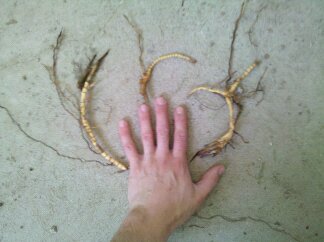
The rhizomes varied is size. Most were a generid size of a finger with some roots attached. Every now and then there was a root that was close to the size of an entire hand.
Three standard rhizomes by my hand


This past weekend we were able to get the planter ready to go. After seeing the rhizomes we did a little re-design to get the planter ready to go.

We configured the drop tube to be a 6" PVC pipe that dropped center on the row. this let us add a nice seat behind the basket, and raise the basket to a workable height. We had to remove the old wheel packers, and rather changed them out for some old International planter packer wheels we had available.
Planter from behind

Added wings to the original plow shanks to prevent dirt from filling it the furrow

Side of the planter, taken when a little dark, but you can see the parts.